The Comprehensive Guide to Body Mass Index (BMI)
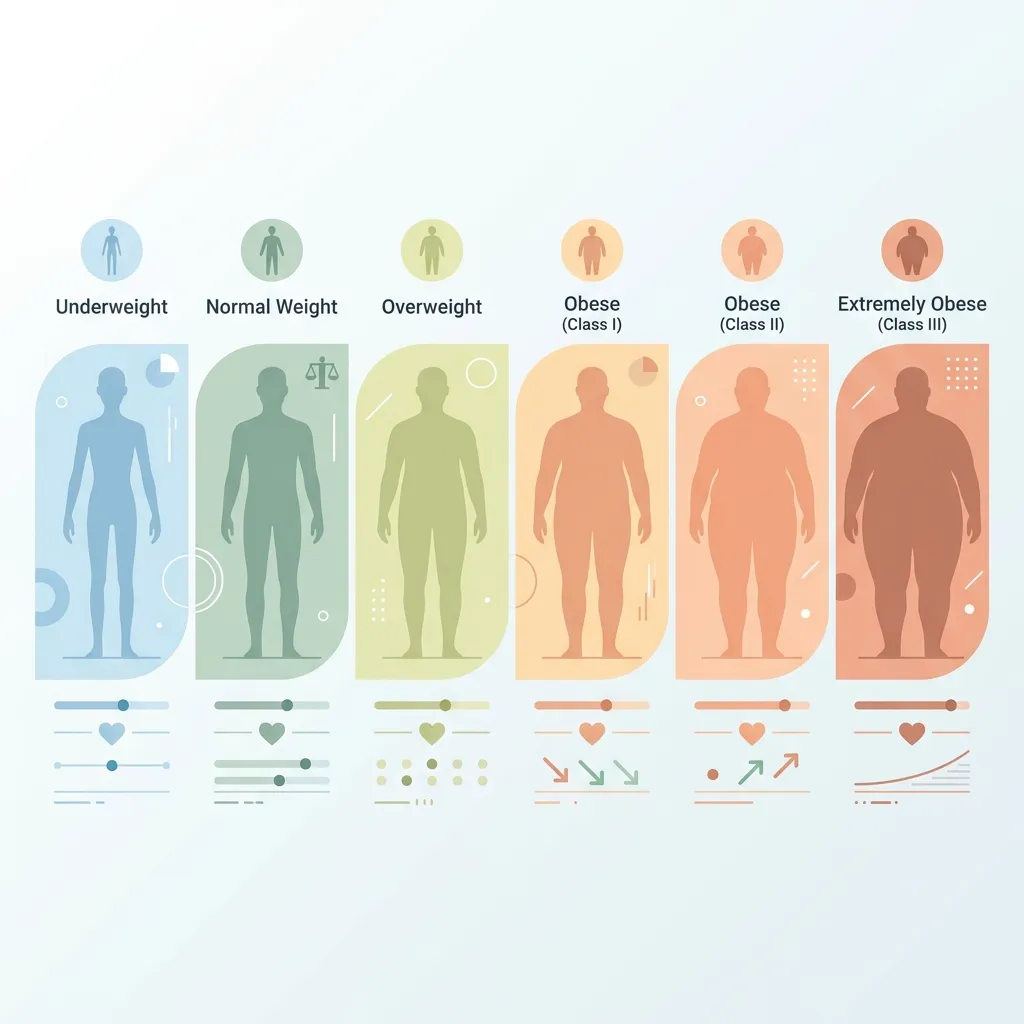
For informational purposes only. The following content reflects general educational information based on publicly available health data. It is not a substitute for personalized advice from a qualified healthcare provider.
Body Mass Index (BMI) has been the gold standard for weight categorization for over a century. However, as our understanding of metabolic health evolves, the question arises: is it still the best measure we have?
1. What is BMI and How is it Calculated?
BMI is a mathematical formula that relates an individual’s weight to their height. Specifically, it is calculated as weight in kilograms divided by the square of height in meters ($kg/m^2$). Developed by Lambert Adolphe Jacques Quetelet in the 19th century, it was originally designed as a statistical tool for populations rather than individuals.
2. The Standard Classifications
According to the World Health Organization (WHO), BMI is categorized as follows:
- Underweight: Below 18.5
- Normal weight: 18.5 – 24.9
- Overweight: 25.0 – 29.9
- Obesity: 30.0 and above
3. Where BMI Falls Short
The primary criticism of BMI is that it does not distinguish between muscle mass and fat mass. This means athletes and bodybuilders often fall into the "overweight" or "obese" categories despite having very low body fat percentages. Furthermore, it does not account for the distribution of fat, which is a major factor in metabolic health.
4. Why We Still Use It
Despite its limitations, BMI remains a useful screening tool. It is non-invasive, inexpensive, and shows a strong correlation with metabolic and health outcomes across large populations. It serves as a vital first step in identifying potential health risks.
5. Conclusion and Expert Advice
While BMI is a valuable metric, it should never be the only one. Consult with a healthcare provider who can assess your overall health through blood pressure, lipid profiles, and body composition analysis.
Ready to Take Action?
Don't leave your health up to guesswork. Use our free, advanced educational calculators to instantly explore your baseline metrics right now.